
“What fires together, wires together”
Therapeutic approaches are constantly evolving—and now go far beyond conversations and prescribing medication. One particularly promising alternative to the usual options is transcranial magnetic stimulation (TMS). This is a modern, non-drug, non-invasive, and low-complication treatment method for people who have not achieved sufficient improvement with antidepressant medication and/or do not want psychopharmacological treatment.
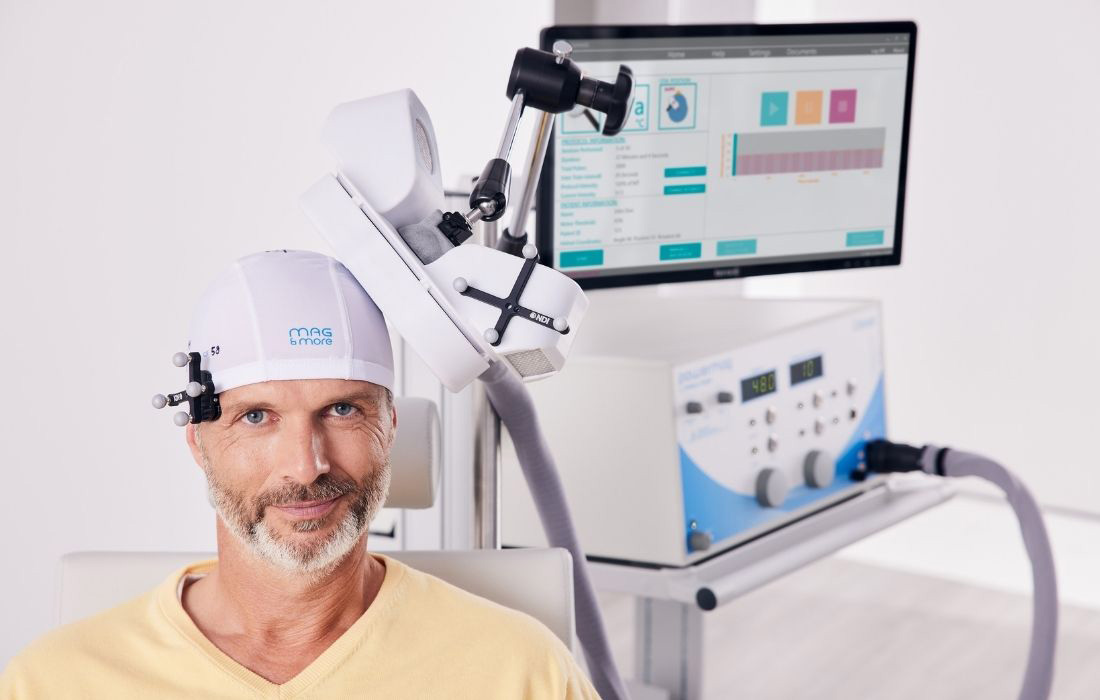
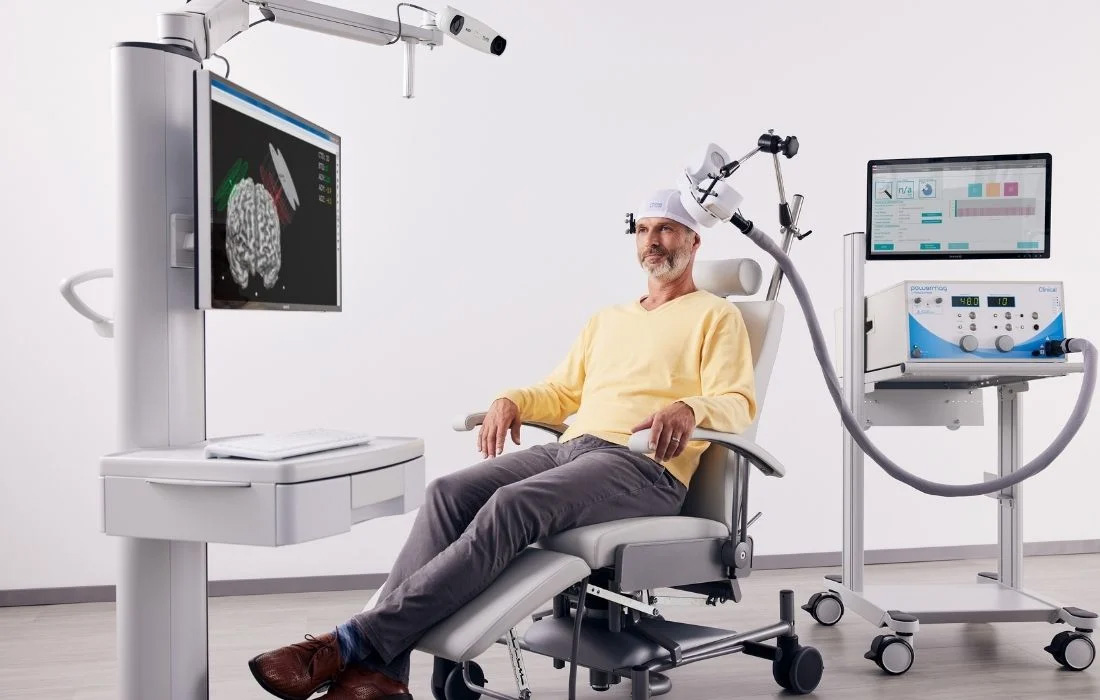
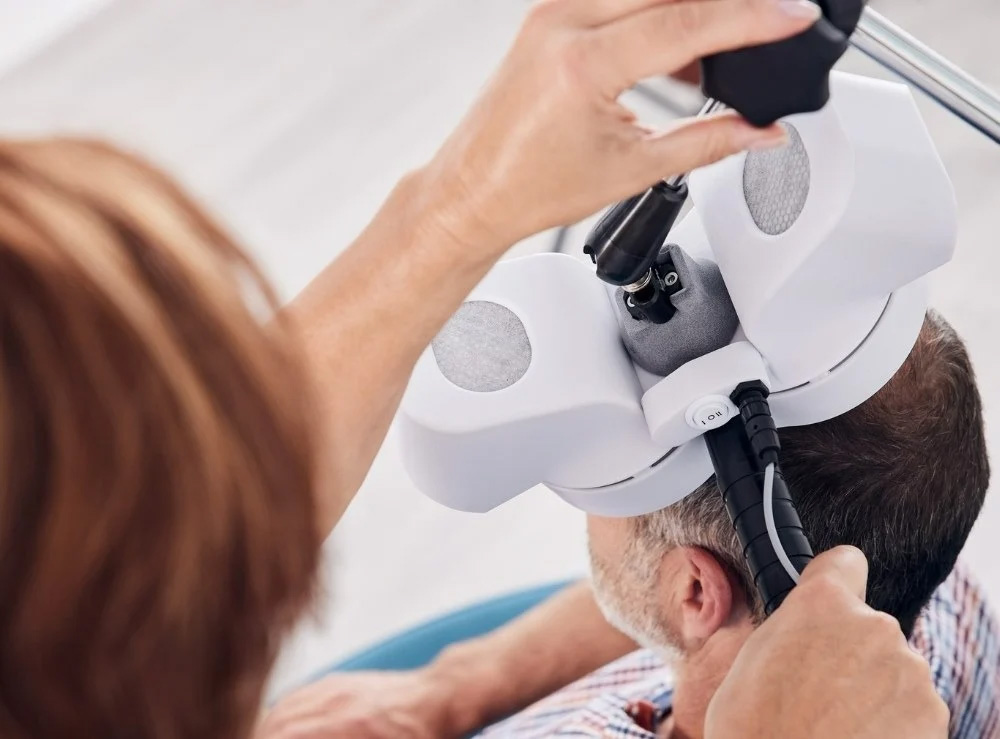
TMS sends pulses to the brain using a “transmitter” that is simply placed on the surface of the head. This activates specific nerve cells and improves connections between areas of the brain. And that feels good!
The cognitive control networks responsible for thinking and recognition, memory, and problem solving are stimulated. The orbitofrontal brain region (which plays a central role in evaluations and decisions), the amygdala (responsible for processing emotions), and the hippocampus (essential for memory and learning) are also activated. This improves cognitive control over emotions and reduces negativity, dissatisfaction, irritability, and rumination. The consolidation of negative emotions and loss of energy are eliminated, minimizing symptoms of depression, anxiety, and compulsion.
With 30 sessions, 1-2 Tesla magnetic strength stimulates better brain connectivity. The impulses only penetrate to a depth of about 2.5 centimeters. However, they activate nerve cells that affect deeper networks in the brain and strengthen neural connections. In this way, the therapy helps the brain to reduce and possibly eliminate connectivity deficits. Patients thus optimize their brain and increase their control over their lives.
Nicotine addiction alters the interaction between various brain networks involved in reward, motivation, learning, and impulse control. Nicotine activates nicotinic acetylcholine receptors and, among other mechanisms, leads to increased dopamine release in the mesolimbic reward system via the ventral tegmental area (VTA). Through repeated use, certain situations and stimuli—such as coffee, stress, or the smell of smoke—become associated with nicotine use and can later trigger intense cravings on their own. At the same time, areas of the prefrontal cortex, particularly the dorsolateral prefrontal cortex, play a key role in controlling such impulses.
This is where repetitive transcranial magnetic stimulation (rTMS) comes into play. In this procedure, magnetic pulses are repeatedly directed from outside the body at specific areas of the brain, often the prefrontal cortex. The electrical currents generated by this can alter the excitability and activity of neural networks and thus also influence their connection to the systems involved in reward and craving. The goal is to reduce the cravings triggered by nicotine cues and to support cognitive control over the urge to smoke.
This may sound too good to be true. But it is true! This has been proven by solid research that has been ongoing for decades. Scientific studies show an effectiveness of 70 percent. That is more than psychotherapy achieves. However, psychotherapy – as has been proven – serves as an effective supplement!
With TMS, minimal side effects may occur at the beginning: possibly mild headaches, slight dizziness, neck tension. But these usually pass quickly. Here’s another comparison: Psychotropic drugs are (still) helpful. However, they are only 50 to 60 percent effective. TMS scores better. This means that people can be treated quickly and effectively without pills.
Interested?